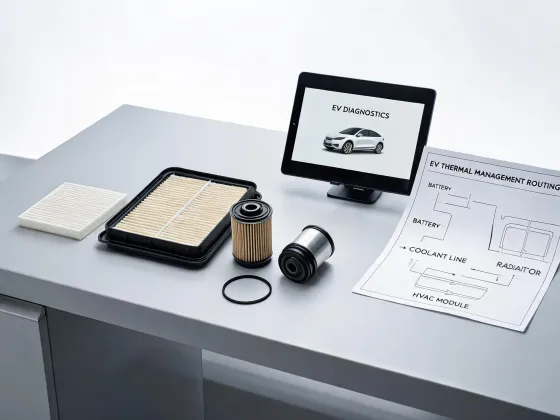
Thermal-management awareness
Electrified platforms increase the importance of clean airflow, controlled service routines and clear application data. Hengst positions filtration discussions so buyers can separate traditional ICE replacement demand from emerging thermal and cabin comfort requirements.
High-voltage-ready service language
Service networks need instructions and catalog notes that respect high-voltage safety boundaries. Even when a filter itself is familiar, the surrounding workflow may require clearer training and documentation signals.
Connected catalog operations
EV-era buyers rely on clean data handoffs between catalog platforms, service advisors and inventory teams. Hengst keeps fitment confidence and cross-reference logic close to the commercial workflow.
For distributors and fleet operators, the EV transition does not remove the need to manage traditional filter demand. It adds a planning layer. Passenger vehicle repair networks still need oil, air, fuel and cabin filter coverage for the vehicles in service today, while newer platforms change expectations around HVAC performance, thermal systems, diagnostic workflows and documentation. Hengst helps buyers discuss these changes without abandoning the catalog discipline that keeps aftermarket operations efficient. A useful EV sourcing conversation should identify the vehicle platform, the service environment, the expected maintenance interval, any safety documentation and the catalog system that will display the result. That level of detail helps parts teams avoid vague future claims and instead build a practical path for the next sourcing cycle.